How SentraMesh Enables Enterprises to Enforce ISO 42001 Compliance

Ensuring compliance with ISO 42001 is a critical challenge for enterprises operating in regulated industries. This standard sets clear requirements for managing autonomous AI systems safely and securely. Meeting these requirements demands a robust control plane that can govern AI agents effectively. SentraMesh offers a solution designed to help enterprises enforce ISO 42001 compliance while scaling their AI deployments.
Understanding ISO 42001 and Its Importance for Enterprises
ISO 42001 focuses on the governance and risk management of autonomous AI systems. It requires organizations to establish controls that ensure AI agents operate within defined boundaries, maintain security, and respect privacy. For enterprises, this means implementing systems that can monitor, control, and audit AI behavior continuously.
The standard emphasizes:
Clear accountability for AI actions
Risk assessment and mitigation
Secure deployment and operation
Transparent reporting and audit trails
Meeting these requirements is not straightforward. Autonomous AI agents can act unpredictably without proper oversight. Enterprises need a control plane that can enforce policies, detect anomalies, and provide real-time governance.
How SentraMesh Supports ISO 42001 Compliance
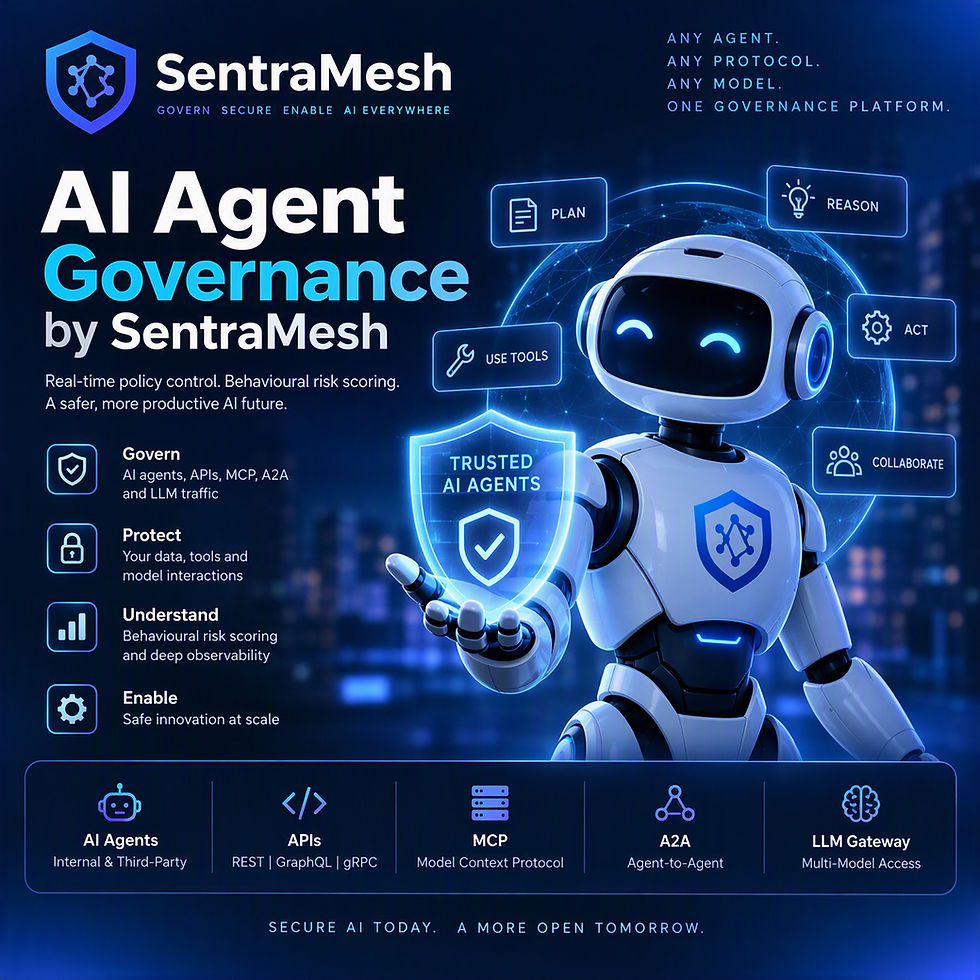
SentraMesh is designed as a control plane for enterprises adopting autonomous AI. It bridges the governance gap by providing tools to deploy and scale agentic systems safely and compliantly. Here’s how SentraMesh helps enforce ISO 42001:
Centralized Policy Enforcement
SentraMesh allows enterprises to define and enforce policies centrally. These policies govern what AI agents can do, where they can operate, and how they interact with data and systems. This centralized approach ensures consistent compliance across all AI deployments.
Real-Time Monitoring and Alerts
SentraMesh continuously monitors AI agents’ behavior. It detects deviations from expected actions and triggers alerts when policies are violated. This real-time oversight is essential for risk management and quick response to potential issues.
Audit Trails and Reporting
Compliance requires transparency. SentraMesh maintains detailed logs of AI activities, policy enforcement actions, and system changes. These audit trails support internal reviews and external audits, demonstrating adherence to ISO 42001.
Secure Deployment and Access Control
SentraMesh integrates security controls that limit AI agents’ access to sensitive resources. It enforces authentication, authorization, and encryption standards, reducing the risk of unauthorized actions or data breaches.

Comparing SentraMesh with Other AI Governance Solutions
While several tools claim to support AI governance, SentraMesh stands out for its focus on autonomous AI and ISO 42001 compliance. Unlike generic AI management platforms, SentraMesh is built specifically to handle agentic systems that operate with a degree of independence.
Other solutions may offer policy management or monitoring, but they often lack the integration needed to enforce compliance at scale. SentraMesh combines policy enforcement, real-time monitoring, and secure deployment in one platform, making it a comprehensive choice for enterprises.
Practical Steps to Implement SentraMesh for ISO 42001 Compliance
Enterprises can follow these steps to leverage SentraMesh effectively:
Define Compliance Policies
Map ISO 42001 requirements to specific policies within SentraMesh. This includes access controls, operational limits, and risk thresholds.
Deploy AI Agents through SentraMesh
Use SentraMesh as the control plane for all autonomous AI deployments. This ensures every agent operates under the defined policies.
Set Up Monitoring and Alerts
Configure real-time monitoring to detect policy violations. Establish alerting mechanisms for rapid incident response.
Maintain Audit Logs
Enable detailed logging of AI activities and policy enforcement. Use these logs for compliance reporting and audits.
Review and Update Policies Regularly
Compliance is ongoing. Regularly review policies and system performance to adapt to new risks or regulatory changes.
The Role of SentraMesh in Bridging the Governance Gap
The governance gap in AI arises when autonomous agents operate without sufficient oversight. SentraMesh closes this gap by providing a control plane that enforces boundaries and ensures agents act within secure limits. This capability is essential for enterprises that want to adopt AI safely and meet ISO 42001 standards.
By using SentraMesh, enterprises gain confidence that their AI systems comply with regulations and operate securely. This reduces risk and supports responsible AI adoption.

Conclusion: Building Trust with SentraMesh and ISO 42001
Enforcing ISO 42001 compliance is a complex task that requires a dedicated control plane for autonomous AI. SentraMesh offers a practical solution that helps enterprises define policies, monitor AI behavior, and maintain audit trails. This approach supports secure, compliant AI deployments at scale.
Enterprises looking to adopt autonomous AI should consider how SentraMesh can help them meet ISO 42001 requirements. By bridging the governance gap, SentraMesh enables safer AI operations and builds trust in agentic systems.
Explore more about SentraMesh and how it supports ISO 42001 compliance on their official website.
Comments