Understanding Autonomous AI Capabilities in Control Systems

Autonomous AI capabilities are transforming how enterprises manage complex systems. These capabilities enable machines to operate independently, make decisions, and adapt to changing environments. For regulated industries, this shift demands a new approach to control and governance. I explore the core concepts, practical applications, and challenges of autonomous AI in control systems. This knowledge helps teams deploy and scale AI-driven agents safely and compliantly.
The Importance of Autonomous AI Capabilities
Autonomous AI capabilities allow systems to perform tasks without human intervention. This independence improves efficiency, reduces errors, and accelerates decision-making. In regulated industries, these benefits come with increased responsibility. Enterprises must ensure AI agents operate within strict boundaries to meet compliance and security standards.
Key benefits include:
Real-time decision-making: AI agents analyze data and respond instantly.
Scalability: Systems can expand without proportional increases in human oversight.
Consistency: Automated processes reduce variability and human error.
Adaptability: AI learns from new data and adjusts behavior accordingly.
These capabilities are essential for industries like finance, healthcare, and manufacturing, where precision and compliance are critical. However, the complexity of autonomous AI requires robust control frameworks to prevent risks.

What are autonomous AI systems?
Autonomous AI systems are software agents designed to operate independently. They sense their environment, process information, and take actions to achieve specific goals. These systems rely on machine learning, natural language processing, and other AI techniques to function without constant human input.
Examples include:
Automated trading platforms that execute financial transactions based on market data.
Industrial robots that adjust manufacturing processes in real-time.
Smart grid management systems that balance energy supply and demand.
Autonomous vehicles navigating complex traffic conditions.
Each system requires a control plane that governs its behavior, ensuring it acts within predefined limits. This control plane monitors performance, enforces policies, and manages risk.
Key Components of Autonomous AI Control Systems
Effective autonomous AI control systems consist of several critical components. These components work together to maintain safety, compliance, and operational efficiency.
Perception Module: Collects and interprets data from sensors or external sources.
Decision Engine: Analyzes data and determines the best course of action.
Action Module: Executes decisions through actuators or software commands.
Monitoring and Feedback: Continuously tracks system performance and adjusts behavior.
Governance Layer: Enforces rules, policies, and compliance requirements.
Each component must integrate seamlessly to create a reliable autonomous system. For example, the governance layer might restrict certain actions based on regulatory guidelines. Monitoring tools detect anomalies and trigger alerts or corrective measures.

Challenges in Deploying Autonomous AI Control Systems
Deploying autonomous AI control systems in regulated environments presents unique challenges. These challenges require careful planning and robust solutions.
Regulatory Compliance: Systems must adhere to industry-specific laws and standards. This includes data privacy, auditability, and operational transparency.
Security Risks: Autonomous agents can be targets for cyberattacks. Securing communication channels and preventing unauthorized access is critical.
Ethical Considerations: AI decisions must align with ethical guidelines, avoiding bias and unintended consequences.
Complexity Management: Integrating AI with legacy systems and multiple data sources increases complexity.
Scalability: Systems must handle growth without compromising control or performance.
Addressing these challenges involves collaboration between engineering, security, and risk teams. Implementing a centralized control plane helps maintain oversight and enforce policies consistently.
Best Practices for Managing Autonomous AI Systems
To maximize the benefits of autonomous AI while minimizing risks, enterprises should adopt best practices:
Define Clear Boundaries: Establish explicit rules for AI behavior aligned with compliance requirements.
Implement Continuous Monitoring: Use real-time analytics to detect deviations and respond promptly.
Maintain Audit Trails: Record decisions and actions for accountability and regulatory review.
Use Modular Architectures: Design systems with interchangeable components to simplify updates and maintenance.
Conduct Regular Testing: Validate AI models and control mechanisms under various scenarios.
Foster Cross-Functional Collaboration: Engage stakeholders from compliance, security, and engineering teams.
These practices create a foundation for safe and effective autonomous AI deployment. They also support scaling agentic systems across enterprise environments.
Preparing for the Future of Autonomous AI
The future of autonomous AI control systems will involve greater integration and sophistication. Enterprises must prepare by investing in governance frameworks and control planes that can evolve with technology.
Key focus areas include:
Enhanced Explainability: Improving AI transparency to build trust and meet regulatory demands.
Adaptive Governance: Developing dynamic policies that adjust to new risks and operational contexts.
Interoperability: Ensuring AI systems can communicate and cooperate across platforms.
Human-in-the-Loop Models: Balancing autonomy with human oversight for critical decisions.
By prioritizing these areas, organizations can harness autonomous AI capabilities while maintaining control and compliance.
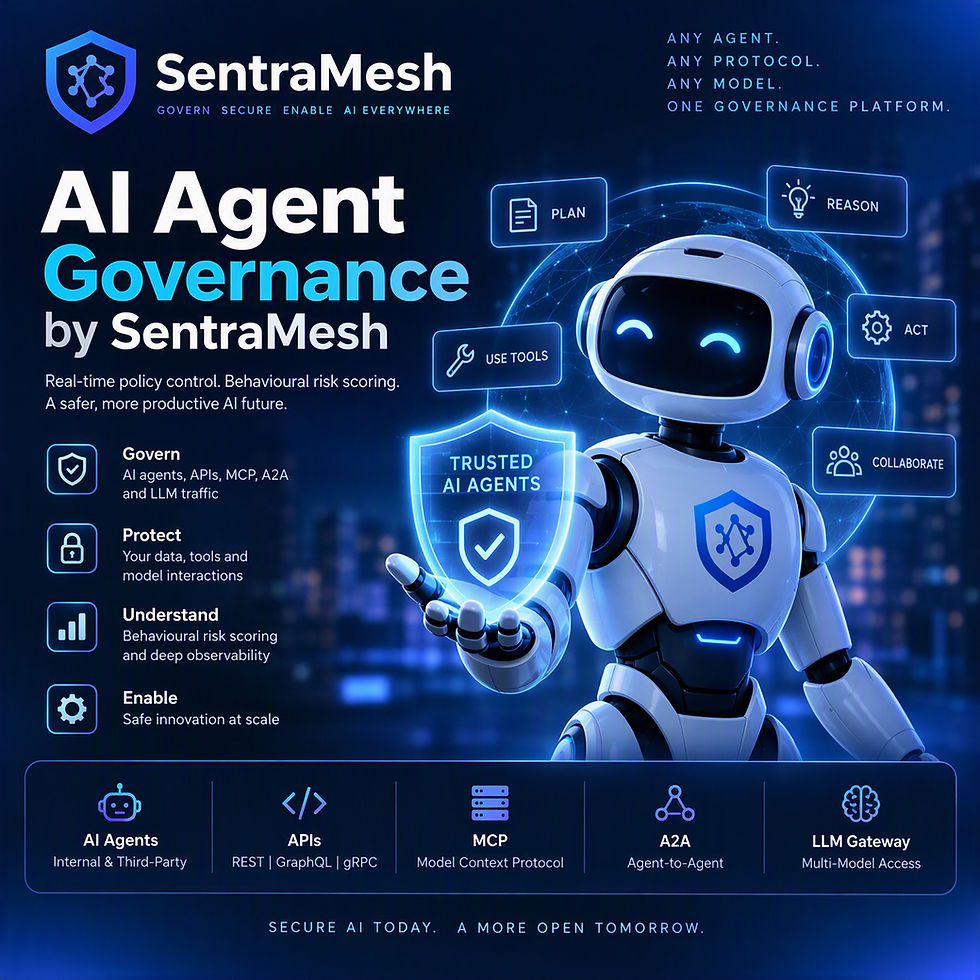
For enterprises adopting autonomous AI, platforms like SentraMesh offer essential control planes. These solutions bridge the governance gap, enabling secure and compliant deployment of agentic systems.
Understanding autonomous AI capabilities is vital for managing modern control systems. By focusing on clear governance, robust monitoring, and collaborative practices, enterprises can unlock the full potential of AI while mitigating risks. This approach ensures autonomous AI agents operate safely within regulated environments, supporting business goals and compliance mandates.
Comments